


Harley-Davidson
21 year-old William S. Harley first drew up plans for a small engine, to be used in a regular bicycle, in 1901.
Over the next two years Harley, and his childhood friend, Arthur Davidson, pushed the design at the home of their friend Henry Melk, eventually finishing in 1903. However, the finished product was found to be wanting in power as it couldn’t take the rider up Milwaukee hills without pedal assistance.
Undeterred the two went back to the drawing board and in January 1905 small adverts were placed that offered bare Harley-Davidson engines and by April of the same year, complete motorcycles were being produced.
It didn’t take long for Harley-Davidson to make its mark and by 1920 it was the largest motorcycle manufacturer in the world with bikes being sold in 67 countries.
In 1921 a Harley-Davidson, ridden by Otto Walker, was the first motorcycle ever to win a race at an average speed of over 100mph.
The friends continued their development throughout the ’20s with a new 1200cc V-Twin engine introduced in ’22 and a teardrop fuel tank in ’25. Front brakes were added in 1928.
During World War II Harley-Davidson produced large numbers of motorcycles for the US army, mostly WLAs and WLCs (the Canadian version), though large numbers were provided to allies.
Harley-Davidson received two Army-Navy E Awards for Excellence in Production.
In 1952 Harley-Davidson was charged with restrictive practices, this followed their application to the US Tariff Commission for a 40% tax on imported motorcycles.
Around this time Hollywood began producing many biker films, usually involving gangs of bikers causing trouble. The films were primarily produced between 1950 to 1970 and Harley-Davidson became synonymous with biker gangs such as the Hells Angels.
In 1969 AMF (American Machinery and Foundry) purchased the company. They quickly streamlined production and made drastic cuts to the workforce which resulted in a labour strike and reducing the quality of the bikes produced.
Harley-Davidson’s were now expensive and inferior products when compared to the Japanese motorcycles and sales quickly declined.
The company didn’t help itself when, in 1977, they produced the Confederate Edition. The bike was basically a stock Harley with Confederate-specific paint and details and was to be one of its most controversial models.
In 1981 AMF sold the company to a group of investors led by Vaughn Beals and Willie G. Davidson for $80 million.
Around this time Harley complained that Japanese manufacturers were harming domestic producers with the volume of imports. President Regan imposed a 45% tariff on imported bikes over 700cc in 1983.
Harley-Davidson went back to producing bikes that matched the retro appeal of its early machines. They also began to buy in components from foreign manufacturers, improving quality and buyers returned.
In 2009, Harley-Davidson announced plans to enter the Indian market and established a subsidiary in Gurgaon near Delhi.
The company has also reportedly had millions wiped from its value after its profits dropped.
Harley-Davidson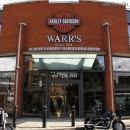
Stay On The Black visits Europe’s oldest Harley-Davidson dealership to see Charlie Stockwell, Custom Specialist 
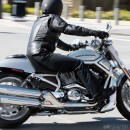
Check out new 2012 range at your local Harley-Davidson dealership
An exclusive look at the passion that drives the Harley-Davidson styling team featuring Wille G Davidson and Casey Ketterhagan
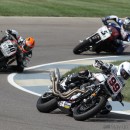
Former MotoGP star Jeremy McWilliams returned to the premier championship arena last weekend at the Red Bull Indianapolis GP
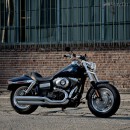
Europe’s oldest Harley-Davidson dealership is gearing up for what is set to be one of the biggest weekends in London bikers’ calendars
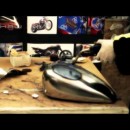
Shaw Harley-Davidson has produced a stunning Captain America motorcycle to commemorate the release of the film
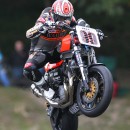
Jezza McWilliams to ride at Red Bull Indianapolis MotoGP for Harley-Davidson
The Strike True II won Modified Harley class of the AMD Official World Championship of Custom Bike Building at Sturgis last year
Harley-Davidson offers more Big Twin performance for 2012 as its Twin Cam 103™ powertrain becomes standard equipment
Most Popular Today
